
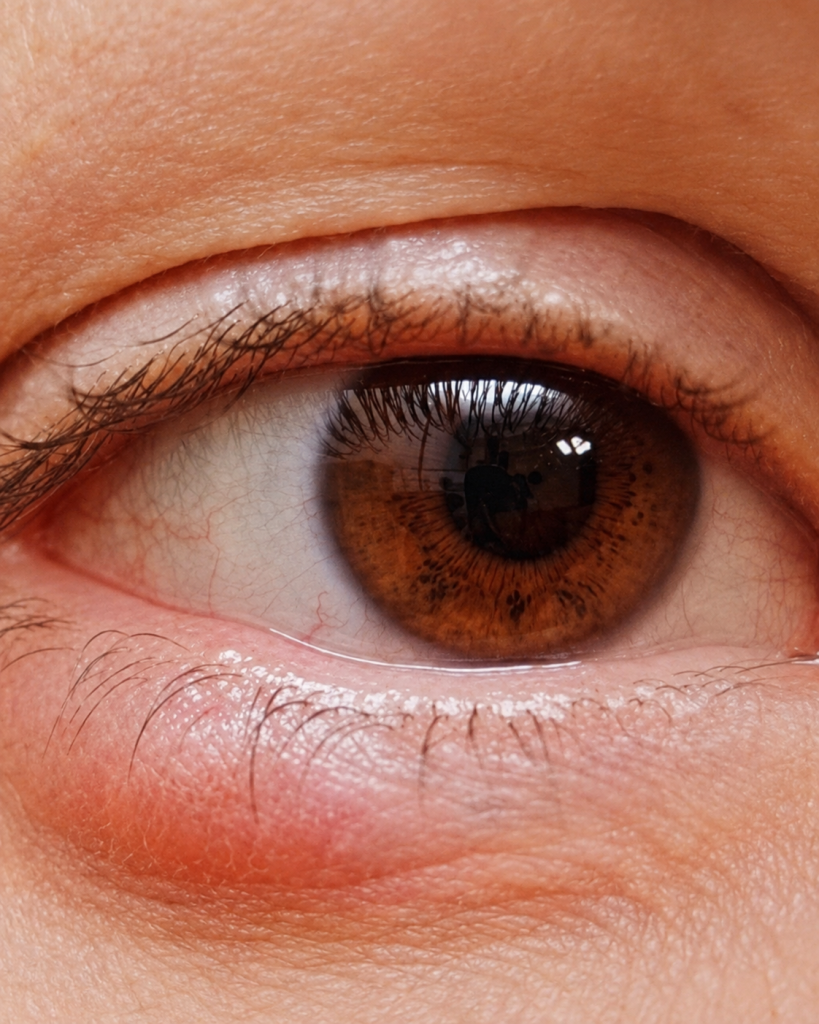
Stye vs. chalazion: they can look the same, but they’re not. One is an infection. One is a blocked gland. Getting the right diagnosis changes your treatment.
A chalazion is a blocked oil gland in the eyelid, often a sign of meibomian gland dysfunction — the same issue behind most chronic dry eye. A stye is a related but different problem: an acute infection that comes on quickly and is usually tender to the touch.
Schedule an Evaluation with Dr. Madan
Not sure if it’s related to dry eye? Take the 2-minute assessment first.
What’s the difference?
A chalazion forms when a meibomian gland becomes blocked and inflamed. It’s typically firm, slow to develop, and often not painful — and unlike a stye, it doesn’t usually resolve on its own. Frequent chalazia are often a sign that the eyelid glands aren’t functioning properly overall.
A stye is an infection, usually of an eyelash follicle. It comes on quickly, is red and tender, and typically resolves within a week or two with proper care. A stye that doesn’t fully resolve can turn into a chalazion.
How treatment works
For a chalazion, warm compresses and eyelid hygiene help the gland drain. If it persists, in-office gland expression can clear the blockage directly. Recurring chalazia point to underlying meibomian gland dysfunction that deserves its own treatment plan.
For a stye, warm compresses and proper lid hygiene are usually enough to help it drain and heal. Larger, persistent, or recurring styes may need prescription treatment or an in-office procedure.
Who should have it evaluated
Not Sure If It’s Related to Dry Eye?
Take a 2-minute assessment to understand your symptoms before your visit.
Book an evaluation
Book a consultation with Dr. Madan to find out whether you’re dealing with a chalazion, a stye, or an underlying gland issue — and get a treatment plan built around the cause.